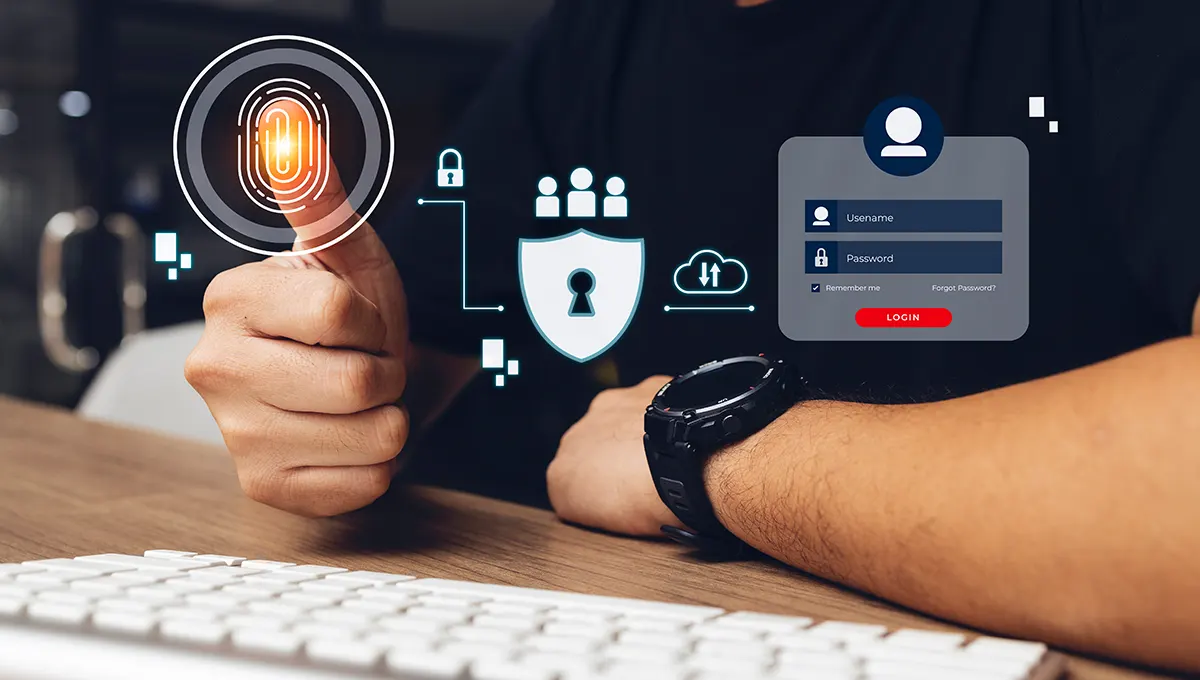
Biometric Authentication Explained Secure Authentication Methods, MFA and Benefits
In a world where digital security is a top priority, biometric authentication has come to represent a revolutionary way of securing and authenticating identity.
Rather than using passwords or codes that are often difficult to remember and easily compromised, biometric authentication uses the unique qualities of one’s biological makeup, such as fingerprints or facial recognition, to provide fast and secure authentication.
The growing need for a more user-friendly and highly secure way of authenticating identity has led to the increased adoption of biometric security.
In this article, you will learn what biometric authentication is, how it works, the real benefits that it provides, its role in multi-factor authentication, and the challenges that it still faces.
By the end of this article, you will have the knowledge to understand why these secure authentication solutions are the future of identity verification.
What Is Biometric Authentication?
Biometric authentication is a security solution that authenticates an individual’s identity by examining distinctive physical or behavioral traits, as opposed to using passwords or security tokens.
Rather than having to remember complicated codes, individuals can log in using characteristics such as fingerprints, facial features, iris patterns, or even voice and typing rhythms.
Such characteristics are uniquely personal and extremely hard to replicate, making biometric security a compelling substitute for traditional login procedures. The process usually involves scanning a biometric trait, encrypting it into a digital template, and then matching it against existing information to verify a positive match.
Popular applications of biometric authentication include fingerprint scanning, facial recognition software, iris scanning, and voice biometrics.
By making the human body a secure login factor, biometric authentication enables a faster, more seamless, and more personalized experience while greatly enhancing security against unauthorized access and identity theft.
How Biometric Authentication Works
Biometric authentication systems typically involve three major steps:
- Enrollment: The biometric information of the individual (such as a fingerprint or facial scan) is obtained and translated into a digital template that is stored securely.
- Storage and Protection: The biometric template is stored, usually encrypted, in a secure database or on local devices for later comparison.
- Matching: During the authentication process, a new biometric scan is obtained and matched with the stored template. If the score is high enough, the individual is granted access.
More advanced systems might employ multimodal biometric systems, which utilize more than one characteristic, like face and voice, to increase accuracy and reliability.
This reduces the chances of false positives and false negatives, making the authentication process more reliable.
Since biometric characteristics are unique and difficult to replicate, this secure authentication process sets the bar much higher for convenience and security than the traditional method.
Benefits of Biometric Authentication
Biometric authentication has seen widespread adoption due to its ability to provide a robust combination of security, convenience, and efficiency:
1. High Security - Biometric characteristics such as fingerprints or facial features are uniquely associated with a person. Biometric authentication systems are not susceptible to attacks such as brute force and credential phishing, as passwords are.
2. Fast and Easy Access - There is no need to remember multiple passwords or use physical tokens. Biometric authentication provides instant access through fingerprint or facial recognition, resulting in a seamless experience that boosts productivity and user satisfaction.
3. Lower Operational Costs - Biometric authentication can result in lower operational costs as there is less need for password reset and support desk services. This results in cost savings as there are fewer support requests and easier access processes.
4. Improved Fraud Protection - Biometric authentication provides better protection against identity theft and impersonation attacks, as it is very difficult to duplicate biological characteristics. This provides better protection against unauthorized access.
5. Improved Accountability - Biometric characteristics are associated with individuals, and activities verified through biometric authentication systems offer sound evidence of identity, which is important for auditing purposes.
All these advantages make it clear why biometric authentication systems are gaining popularity in different sectors and online platforms that require secure authentication solutions.
Multi Factor Authentication and Biometrics
Multi-factor authentication (MFA) uses two or more authentication factors to provide greater security. The factors include:
- Something you know (password)
- Something you have (security key)
- Something you are (biometric characteristics)
Adding biometric authentication as the “something you are” factor to MFA provides greater security by adding a personal and unique factor that is hard to replicate or phish.
This multi-factor approach makes it much harder for unauthorized access to occur, even if other authentication factors such as passwords are compromised.
Using a fingerprint scan and a one-time code (OTP) together, for instance, can make it extremely difficult for hackers to gain unauthorized access using stolen credentials.
As hackers become more sophisticated, using multiple factors makes it harder for scammers to gain unauthorized access.
Using biometric authentication in MFA provides a convenient and secure approach to authentication, making it easier and more secure than ever before.
Real‑World Applications of Biometric Authentication
Biometric authentication is no longer a concept of the future but has been widely adopted across various technologies and devices:
- Device Access: Fingerprint and facial recognition technology has been incorporated into smartphones and laptops for easy and secure access without the need for passwords.
- Financial and Banking Apps: Biometric login security has greatly reduced the chances of fraud when it comes to transactions and account access.
- Workplace and Facilities: Biometric devices have been widely adopted in various settings to restrict access to secure areas or facilities.
- Online Identity Verification: Biometric technology has been widely adopted for onboarding and identity verification on online platforms, minimizing the need for manual verification.
The above examples demonstrate how biometric authentication has filled the gap between usability and security, hence its widespread adoption across various sectors where secure yet seamless access is a priority.
Security Challenges With Biometric Authentication
While biometric systems offer major advantages, they are not without risks:
|
Challenge / Risk |
What It Means |
|
Privacy Concerns |
Biometric data is permanent and highly sensitive. If leaked or misused, it cannot be changed like a password. |
|
Spoofing & Fraud |
Attackers may use fake fingerprints, photos, or deepfakes to trick weak biometric systems without liveness detection. |
|
Accuracy Variability |
Factors like poor lighting, injuries, aging, or worn fingerprints can reduce recognition accuracy. |
|
Bias & Inclusivity |
Some algorithms may perform unevenly across different demographics, raising fairness and accessibility issues. |
Understanding these challenges helps users and organizations implement biometric security thoughtfully and responsibly.
Best Practices for Secure Biometric Systems
To make biometric authentication as effective as possible:
- Biometric templates should be encrypted and stored securely to prevent breaches.
- Anti-spoofing techniques such as liveness detection should be used.
- Biometric authentication should be used as part of multi-factor authentication.
- Inclusive design and testing should be used to improve accuracy and reduce bias.
- Fallback methods (such as PINs or security keys) should be provided for users who have problems with biometric scans.
Conclusion
Biometric authentication is a significant improvement in the area of secure authentication techniques, providing a unique blend of convenience, speed, and improved security that is difficult to achieve with traditional passwords or tokens.
By utilizing distinctive biological characteristics like fingerprints or facial features, biometric authentication can provide a seamless way of verifying identities while minimizing fraud and costs.
But it is also crucial to point out the potential risks associated with biometric authentication, including data privacy and spoofing attacks, and mitigate them using effective security measures.
As the complexity of digital interactions increases and the sophistication of threats escalates, the need to understand and apply effective biometric authentication will become critical for anyone looking for secure yet easy access.
Ready to improve your authentication process? Learn how biometric authentication can improve your security solution without compromising user experience.
FAQ
- What is biometric authentication?
Biometric authentication verifies identity using unique physical characteristics like fingerprints, facial recognition, iris scans, or voice patterns instead of passwords.
- How do I enable biometric authentication?
Go to device settings, select security or biometrics, then register your fingerprint, face, or iris following the on-screen instructions.
- What are the 5 main types of biometric authentication?
Fingerprint scanning, facial recognition, iris scanning, voice recognition, and palm vein recognition are the five most common biometric authentication methods used.
- What are the pros and cons of biometric authentication?
Pros: convenient, secure, difficult to forge. Cons: privacy concerns, expensive implementation, potential false rejections, and irreversible if data is compromised.